


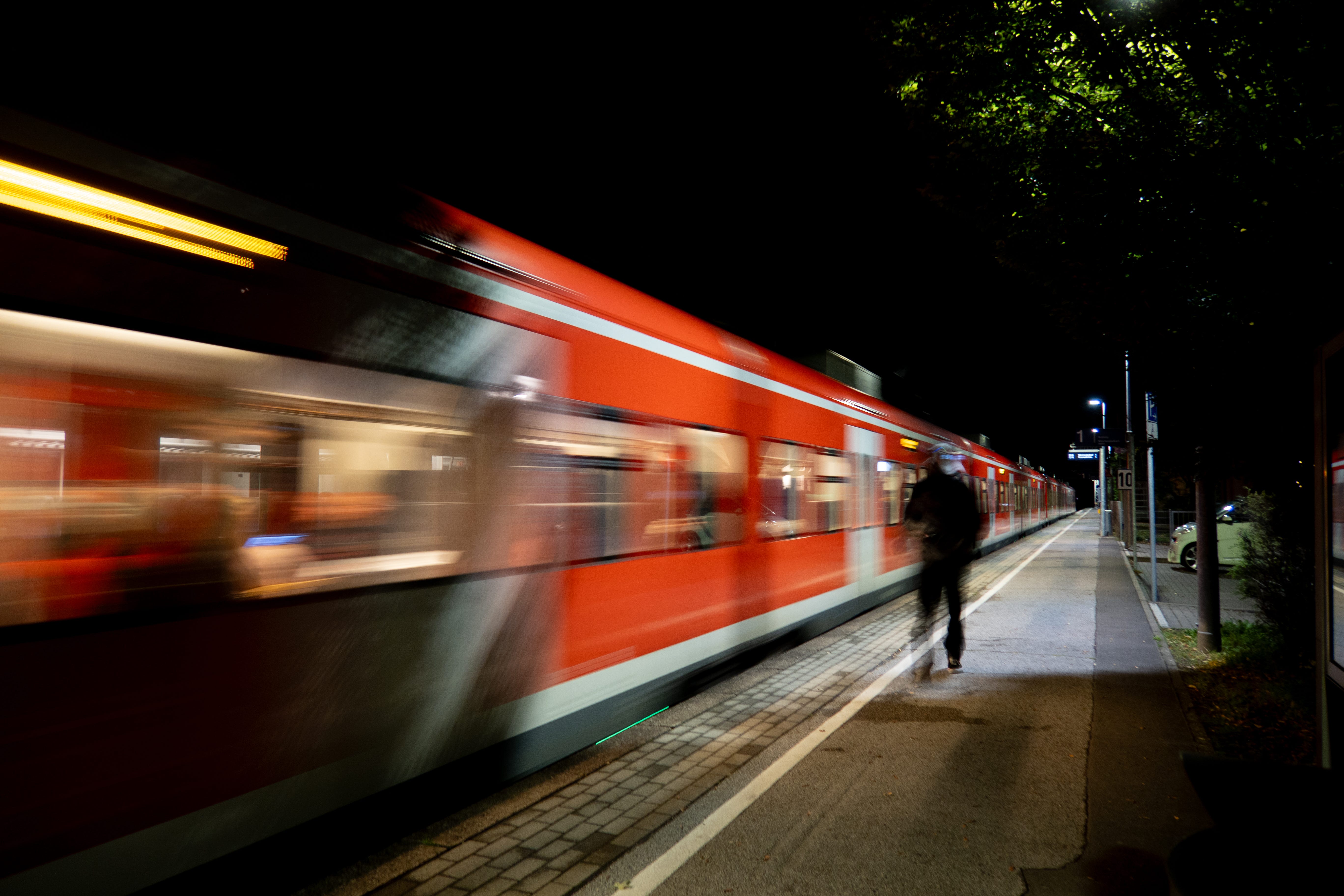
The train pulls away, taillights fading, as the few disembarking passengers on the platform shuffle past. While we had just come from Köln (Cologne) — western Germany’s party capital, many claim— neither reputation nor practice radiates to this suburb, even on a Friday night. As the passengers peter away, the only life emanates from a convenience store up the street. The crossing arm raises, but no traffic comes.
On a whim, I am in this suburb for the first time in twenty-eight years. During December of my exchange, I visited a friend here—Dave, we’ll call him—two weeks after a host-family rupture that had been less breakup than a Dantesque indictment of my soul. Dave, meanwhile, was reveling in the exchange trifecta: an adoring host family, an understanding school, and reciprocal crushes. I’d have settled for one. Yet nearly three decades on, my long weekend in this town still resonates, one of the micro moments that reset my relationship with Germany. And myself.
I turn from the tracks and follow Bahnhofstrasse down a hill. Other than the fact that Dave lived near a windmill, I recall few specifics about this place. In the pre-smart phone days, you only brought a camera for Occasions, capital O, so I’d saved most of my shots for Köln. Google tells me I’ll walk about twelve minutes, a hair short of a kilometer. It’s longer than I’d remembered, but distance and time are kinder to younger legs. If I do this quickly, I think, I can make it back for the train in forty-five minutes. For the first few blocks, I stroll past houses of red and yellow brick. Other than lights leaking through curtains, it’s me and the streetlamps.
When you spend a year in northern Europe, your mentors “forget” to mention how much of that you’ll spend in darkness. I don’t mean metaphors or Germany’s six-month cloud cover either. Central Germany shares a latitude with Calgary, so for weeks, the winter bombards you with sixteen hours of night, day after day. So while I don’t feel sixteen, as I used to when I’d visit Germany, these quiet night walks have a way of waking up memories. One night, about three weeks before visiting this town, I had returned from Nürnberg to Passau at midnight and had been so petrified about calling my temporary family so late for a pickup that I’d walked six kilometers back to their place alone. Decades later, I can still picture the eerie silence along the Danube, the streetlights illuminating the churches and onion domes, the knowledge that no one knew where I was. Like now.
Wait, I recognize something! A timber-framed house, flush against the road. I don’t know why that strikes me as familiar. Had Dave and I passed it? Was it dusted with snow and I thought it so un-Bavarian that I made some sarcastic quip about Prussia? Gah, it annoys me. I shrug it off and continue.
I chuckle. After our first schlep from the station, Dave’s host mom greeted us with a letter. It was addressed to him and from, how to say this, a girl I’d recently rebuffed — and, thanks to my host-family change, had been thrown into school with. Such fates that can only befall exchange students are hilarious in hindsight, but oh did this letter rip; name the resentment, the swipe, it was there, an indictment on par with those host family grievances. Breakups come and go, but you never forget the first time someone goes full Medea.
I cross an empty road. I can see the windmill now and follow the street toward it. I pause about sixty yards short. The last stretch is a pedestrian path, the bushes and trees on one side smothering the already scant light. I feel like I’d have remembered if Dave had led me this way. I’ve never been worried about getting mugged in Germany, but this feels like pushing my luck. If anyone sprung out, all I could do was stumble to a bar, eyes bruised and teeth gone, and call my wife with a “so I’m in this random suburb, but hear me out” and her being like “I think you’re obsessed with this memory thing” and me being all “yes, you married a nostalgic idiot, but …”
When you spend a year in northern Europe, your mentors “forget” to mention how much of that you’ll spend in darkness.
No one jumps. The windmill stands, illuminated against the flog, silver blades in an ‘X.’ I take it in for a second and catch my breath. I quicken my pace as I plod another block. For a trip I recall so fondly, I’m embarrassed to admit I remember nothing about the house. I’m not even clear on which one it is—thanks, Google—and am not about to saunter up for inspection. But I think I’m right: a long brick house, triangular roof, facing the windmill. For a few minutes, I stand in the dark.
As the trip wound down, Dave and I were chatting and sipping on Kölsch. His year wasn’t all roses, he admitted. He had arrived with lofty expectations of reconnecting with a friend—now his host brother—who all but ignored him. He talked of loneliness, disconnection, even foibles with the ladies, all the stuff I’d beaten myself up over (and in some cases, had written screeds to prove it). With age, I realize the ubiquity of such teenage struggles and how hormones and lack of hindsight turn drumlins to massifs. But after weeks of my host family insisting I was the problem, hearing that someone else had it imperfect was the sliver of hope I needed. It would take months, even another host family, to change the year’s course in full. But as I look back, these small moments built the resilience that culminated in those triumphs.
After a few minutes, I check my phone. Twenty-two minutes till the train. I take another route toward the town center and back through the light.