

So much for doing your own research.
As I was preparing to review the majestic yet earthy prose and the wet from sweeping seascapes in The Salt Path—Raynor Winn’s runaway 2018 bestseller that became the 2024 film—report after report after report insisted that Wynn exaggerated the premise. She did not, her detractors claim, lose her farm in Wales due to some bad investments (financial fraud generates a lot less empathy). And her husband’s terminal, rapidly advancing cancer diagnosis that the walk supposedly forestalled turned out to be neither terminal nor rapidly advancing (he’s still alive). Ms. Wynn disputes the charges. But as a reader, sometimes it’s better to maintain your illusions.
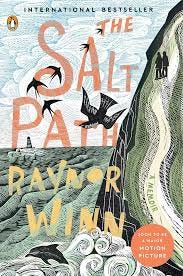
Which is unfortunate, since The Salt Path still would have had enough juice without the perseverance angle. Indeed, Ms. Wynn’s decision—however it arose—to walk the 630-mile South West Coast Path along the southwest peninsula of Great Britain, was a bold enough premise. Along the way, Ms. Wynn treats her readers to eloquent yet grounded descriptions of the windswept coast, of walking through brambles and over rocks, of wild camping everywhere from golf courses to beaches. Despite little actual plot—spoiler: they keep walking—she possesses a remarkable gift of keeping her reader in an otherwise normal British landscape. I was less interested in whether Ms. Wynn would finish, but in the lessons she would pile up along the way.
Indeed, Ms. Wynn’s asides on the walk’s “circumstances” and lessons are some of her most poignant notes. “Our hair was fried and falling out, our nails broken, clothes worn to a thread, but we were alive. Not just breathing through the thirty thousand or so days between life and death, but knowing each minute as it passed, swirling around in an exploration of time,” she writes. The lesson may be trite—“Live in the moment” is about the most ancient conclusion one can land on—but the prose makes it worth reading. The same holds for the moment when Ms. Wynn watches a ferry to Spain pass out of sight, as she reflects on observing one’s past life fade into the horizon. The new, (maybe) earned spins on old wisdom give The Salt Path its salience.
As author and therapist Lori Gottlieb puts it, “there’s no hierarchy of grief.” And if Ms. Wynn did fabricate her circumstances, it’s tragic, since she didn’t need the supposed trauma to confront these conclusions. Anyone in their mid-forties can attest that death doesn’t have to be imminent to be ever-present, that one needn’t stand on the precipice of loss to reflect on the harshness of its inevitability. Even those who haven’t lost everything can view relics of a past life and mourn their irretrievability. Perhaps Ms. Wynn should have trusted herself a bit more. Or perhaps she should have realized that she didn’t need grief to take her readers on the trail. In one of the most famous hiking memoirs, Bill Bryson set out on the Appalachian Trail because he felt like it.
Regardless of its backstory, I appreciated The Salt Path’s reflections and its lyric descriptions of the British coast. As a piece of travel literature, it more than holds up. Had I not stumbled upon the news about the controversy, I would have led with “This book made me feel soaked.” For a coastal hike, at least that remains beyond dispute.